
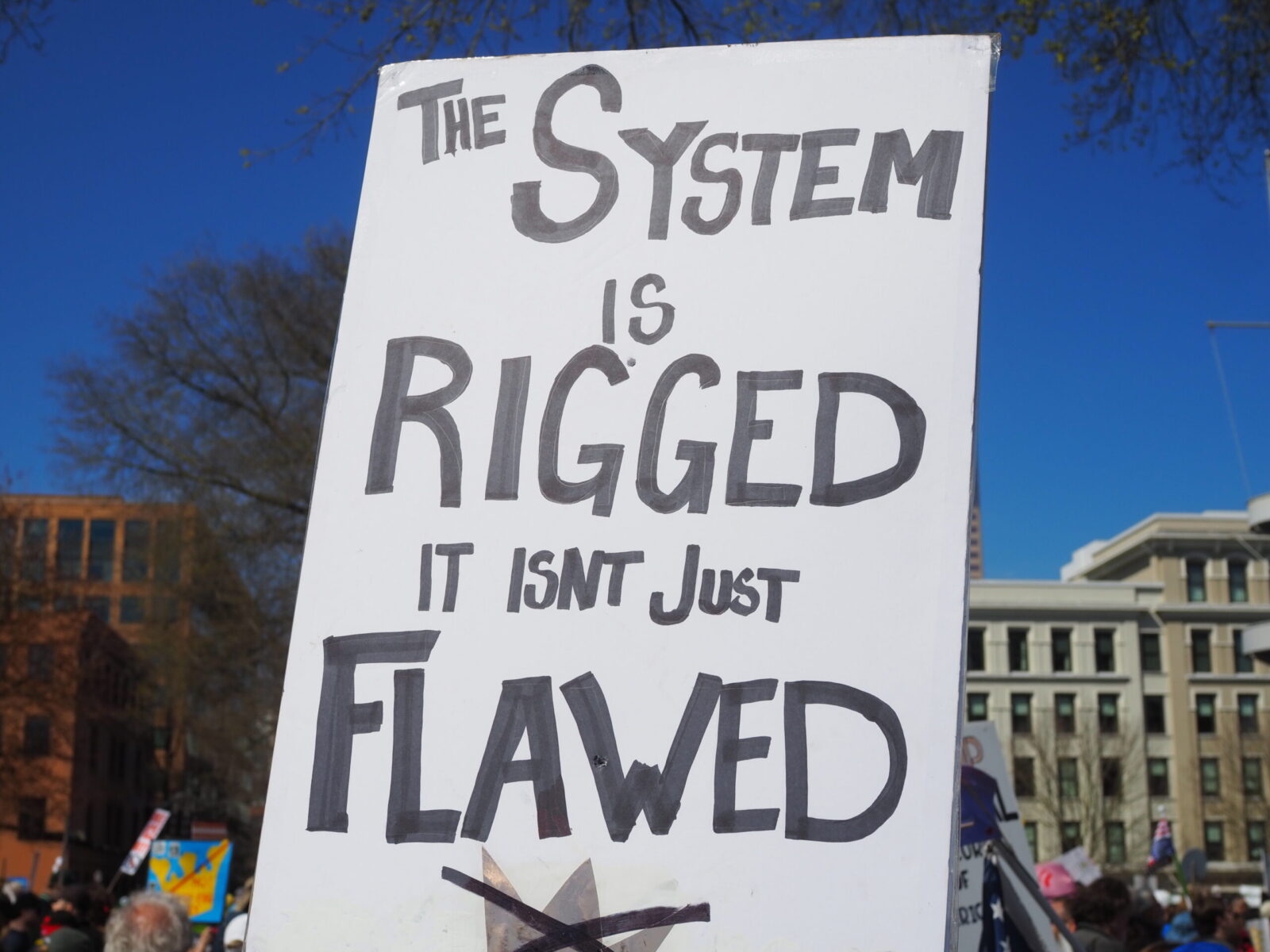
We have heard a great deal about political realignment since the rise of the Donald Trump era, and even more so now in the context of the turbulence of his second term. Many explanations have been offered: class, education level, geography, gender, and a range of other demographic divisions. Yet despite this abundance of analysis, the realignment that matters most has not yet been properly identified.
If we insist on a single axis of political conflict, it should not be built around shifting cultural issues or performative identity categories. Instead, it should focus on a far more fundamental question: the degree of centralization in power. Much of contemporary political discourse, with its focus on symbolic cultural battles, functions more like entertainment than serious analysis. It obscures rather than clarifies how power actually operates.
Terms like “left” and “right” offer little help here. They are unstable across time and place, lacking consistent meaning. In practice, they often resemble team loyalties in sport more than coherent ideological positions. The frustration many citizens express toward contemporary politics stems precisely from this disconnect between public debate and the real structures of power.
A more meaningful political framework would ask whether decision-making authority is concentrated in large, distant, and opaque institutions beyond meaningful public control. This is the essence of a “scale-based” political perspective: when institutions exceed a human scale, participation becomes symbolic rather than real, and exit options become theoretical rather than practical. In this view, institutional size is not a secondary issue—it is the central political question.
This line of thinking has intellectual roots. In 1973, E.F. Schumacher’s Small Is Beautiful argued that economic systems should be designed to serve human needs rather than institutional expansion. Earlier, economist Leopold Kohr made a similar claim in The Breakdown of Nations (1957), famously writing that wherever something is wrong, something is too large. Kohr argued that both major political camps ultimately converge in expanding power into increasingly unmanageable structures.
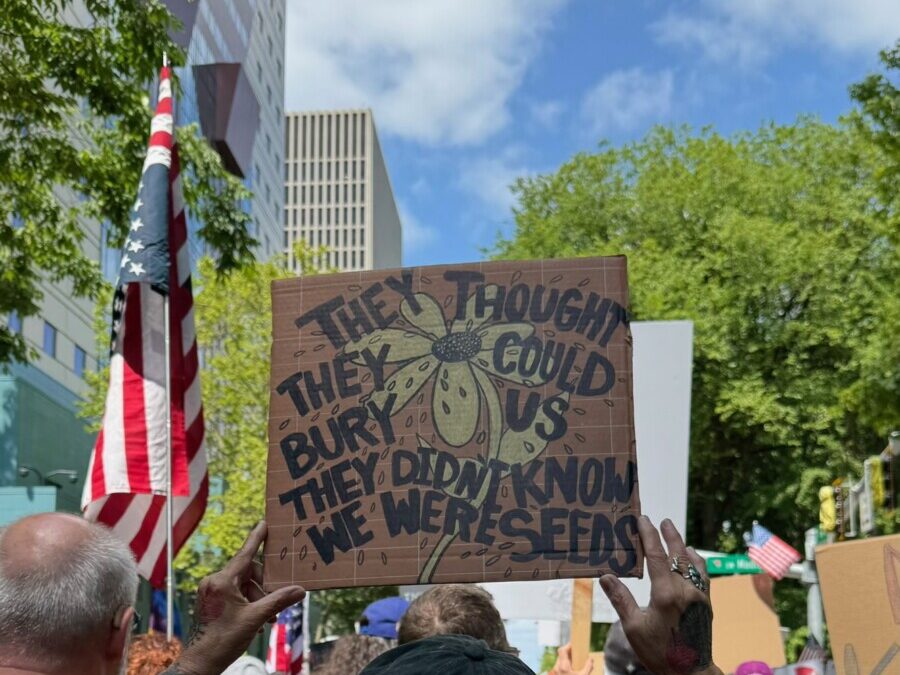
From this perspective, modern politics often fails to acknowledge the extent to which power is concentrated in vast institutions, whether labeled public or private. These structures are so large that ordinary citizens have little meaningful capacity to influence them through electoral mechanisms alone.
Over recent decades, nearly every major sector has undergone significant consolidation. In finance, a small number of asset managers—most notably BlackRock, Vanguard, and State Street—have become dominant shareholders across major corporations. In banking, the number of institutions has sharply declined since the 1980s, with assets increasingly concentrated in a small number of large firms. Similar patterns appear in healthcare, where consolidation has reduced competition in many regional markets. Agriculture, too, is characterized by extreme concentration, with a handful of corporations controlling large shares of global seed and agricultural inputs.
Across sectors, the same trend is visible: scale increases, competition decreases, and decision-making becomes more centralized. Yet mainstream political debate rarely addresses this structural shift in a systematic way.
From this perspective, elections alone appear insufficient as a mechanism of accountability. Large corporations and institutions are often deeply integrated with state structures, benefiting from regulation, subsidy, and crisis intervention. The result is not a simple distinction between “state” and “market,” but a tightly interconnected system of institutional power.
Advocates of small-scale political and economic organization argue that this system is inherently unstable. They often draw on analogies from physics and geometry to illustrate the risks of scale: as systems grow larger, complexity increases faster than the capacity to manage it. Larger structures require increasingly elaborate reinforcement, while becoming more fragile in unexpected ways.
These thinkers suggest that smaller institutions are not only more accountable, but also more resilient and adaptable. By contrast, excessively large systems tend to accumulate inefficiencies, distance decision-making from local knowledge, and require continuous intervention to remain stable.
The underlying claim is not a rejection of technology or coordination at scale, but a challenge to the assumption that bigger is always better. Technological development, in principle, could support decentralization rather than concentration. Whether it does so depends on how institutions are designed and who controls them.
From this point of view, the central political divide is not between traditional ideological categories, but between centralized and decentralized forms of power. The key question becomes whether economic and political life is organized around large, remote systems or around smaller, locally accountable communities.
This perspective also implies a critique of contemporary political culture. Much of what passes for political debate fails to address institutional structure at all, focusing instead on symbolic disputes or partisan identity. As a result, citizens are left with limited tools to engage meaningfully with the systems that shape their lives.
A more grounded political discourse would return to questions of scale, ownership, and control. It would ask not only who holds power, but how that power is structured and whether it can be meaningfully challenged.
Ultimately, the argument for “small is beautiful” is not nostalgic, but structural. It suggests that many of the most persistent political and economic problems are linked to excessive concentration. If a more functional and democratic system is possible, it will likely require a redistribution of power away from large, opaque institutions and toward smaller, more accountable forms of organization.
The real political realignment, then, may not be left versus right, but large versus small.