
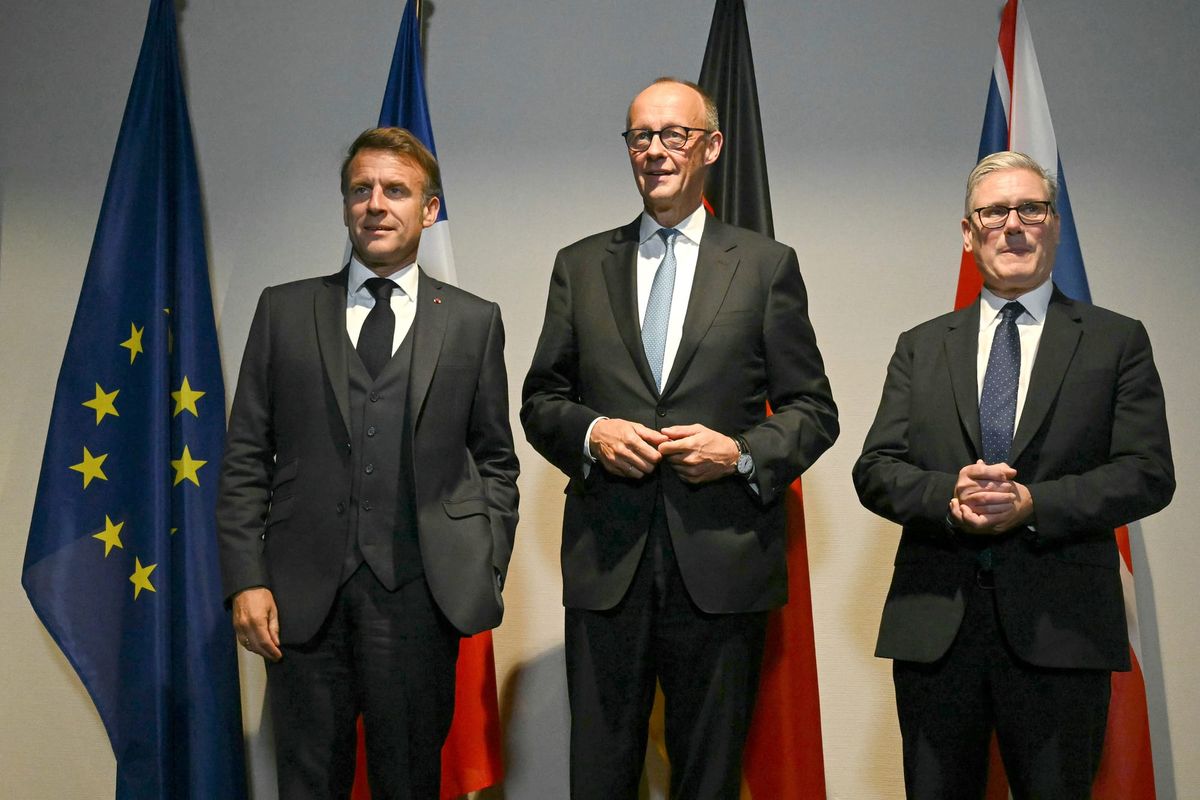
Europe’s liberal establishment has entered a new political era. Faced with Russian aggression, American unpredictability, mass migration, and the rise of right-wing populism, leaders such as Friedrich Merz, Keir Starmer, Emmanuel Macron, and Mette Frederiksen have largely abandoned the expansive liberalism that defined the post-Cold War decades. In its place has emerged what might be called Fortress Liberalism—a political strategy focused less on spreading liberal values than on defending them.
The most significant catalyst has been immigration. The migration crisis of 2015 transformed European politics by exposing a widening gap between public opinion and the policies of mainstream parties. As asylum applications remained historically high and public confidence in integration declined, populist parties successfully presented themselves as the only political force willing to confront the issue. In response, many liberal governments shifted sharply toward stricter immigration policies. Denmark’s Social Democrats pioneered this approach, combining center-left economics with some of Europe’s toughest asylum rules. Similar positions have since been adopted across much of the continent, as liberal parties increasingly argue that preserving liberal societies requires limiting migration and demanding greater cultural assimilation.
Security has become the second pillar of Fortress Liberalism. Russia’s invasion of Ukraine, growing tensions with China, and uncertainty over America’s long-term commitment to European defense have shattered the assumptions of the post-Cold War order. European governments are dramatically increasing military spending, strengthening border controls, and speaking openly about strategic autonomy. What was once considered exceptional—expanded defense budgets, military preparedness, and discussions of European self-reliance—has become political consensus.
The rise of populism has reinforced this defensive mentality. Across Europe, mainstream parties increasingly view their primary task as preventing anti-system movements from taking power. This has encouraged the widespread use of political “firewalls,” broad coalition governments, and, in some cases, legal or constitutional measures designed to exclude populist forces from office. Such policies draw on the concept of “militant democracy”: the belief that democratic institutions may need to restrict certain political actors in order to preserve democracy itself.
Yet these defensive strategies have produced mixed results. While tougher immigration policies and broader governing coalitions have slowed the advance of populist parties in some countries, they have not reversed the broader political realignment. Populist movements continue to expand across much of Europe, while mainstream governments often struggle to articulate a compelling vision beyond maintaining the existing order.
This points to Fortress Liberalism’s central weakness. Liberalism historically derived much of its appeal from confidence in its own expansion—the belief that democracy, open markets, and international cooperation represented the future. Today, that optimism has largely disappeared. Instead of presenting an inspiring project for Europe’s future, liberal leaders increasingly frame politics as a struggle to defend existing institutions against external enemies and internal challengers.
The result is a political philosophy that is pragmatic but fundamentally defensive. It seeks stability rather than transformation, preservation rather than expansion. Whether Fortress Liberalism represents a temporary response to an extraordinary period of crisis or the beginning of a lasting political settlement remains uncertain. What is clear, however, is that Europe’s liberal center no longer governs with the confidence of an ascending movement. It governs from behind walls.