
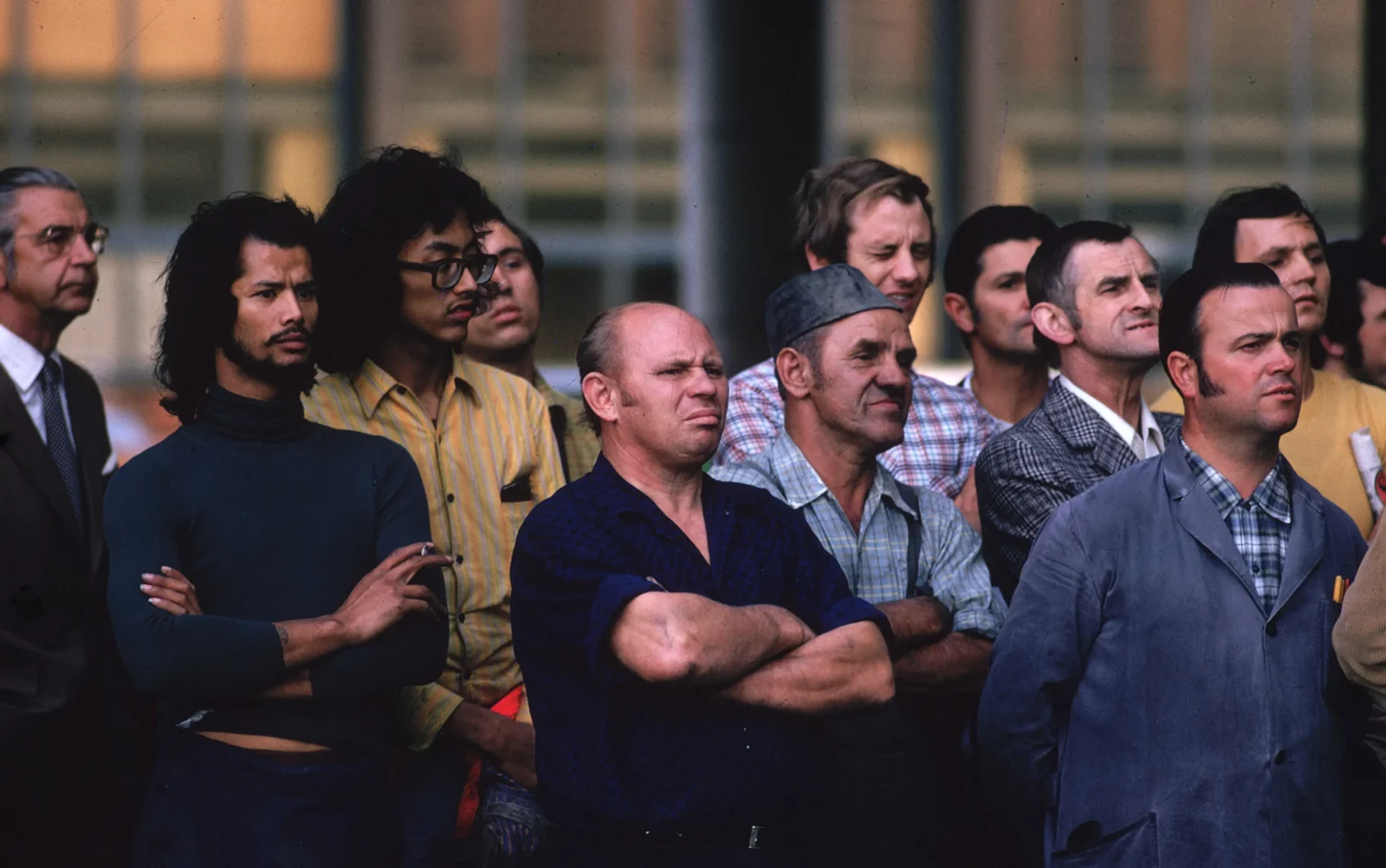
Postwar prosperity was built on a fragile balance between capitalist growth and democratic fairness. The question today is whether such a balance can ever be restored.
After the Second World War, Western Europe and North America entered a period of extraordinary economic expansion. Between 1950 and 1973, GDP in many countries doubled or more. This growth was not only rapid but broadly shared: living standards rose steadily across social classes, and a large middle class emerged. In France, this era is known as les trente glorieuses – the “thirty glorious years” – while Italians call it il miracolo economico. Yet the story of how this remarkable period of shared prosperity was achieved has largely faded from collective memory, despite its relatively recent origin.
How did Western economies manage, within a single quarter of the 20th century, to combine rising equality with strong economic performance? And why did this seemingly virtuous combination eventually unravel by the century’s end? The answer lies in the uneasy relationship between democracy and capitalism. Democracy is grounded in political equality, while capitalism tends to amplify differences based on talent, inheritance, and luck. In principle, democracy can restrain capitalism’s tendency toward inequality; in practice, growing inequality can weaken democracy’s ability to govern the economy in the interests of the majority.
The rise—and eventual decline—of “democratic capitalism” in the postwar era remains one of the defining developments of modern history.
The Second World War dramatically reshaped capitalism. Total war required states to override normal market mechanisms, directing production toward military objectives. Governments taxed and sometimes confiscated private wealth, while rationing consumption and controlling prices. The state assumed unprecedented authority over investment, labour allocation, and trade, subordinating private profit to national survival.
In the war’s aftermath, political pressure and geopolitical tensions pushed Western governments toward more equitable economic arrangements. Capitalism was “domesticated”: markets were preserved but heavily regulated and reshaped to serve broader social goals rather than the interests of investors alone.
This transformation was reflected in rising living standards and wider ownership of assets. In the United Kingdom, home ownership increased from about one-third of households in 1939 to over half by 1971. In the United States, it rose from under half to more than two-thirds. Consumer goods such as automobiles, televisions, and foreign holidays became widely accessible. Governments played a central role in this shift, not only regulating markets but actively redistributing income and reallocating capital.
The experience of two world wars and the Great Depression fundamentally altered power relations within advanced economies. Wartime conditions required direct state control over production and distribution, as markets alone could not ensure the supply of essential goods such as food, fuel, and raw materials. Labour was mobilised through conscription, consumption was restricted through rationing, and public spending expanded dramatically, financed by higher taxes and borrowing.
Taxation reached unprecedented levels. In 1943, Canada imposed a top income tax rate of 95%, while the United States taxed its highest earners at 94%.
Welfare systems also expanded significantly during the war and in its aftermath. In Britain, the Beveridge Report of 1942 laid the foundations for a comprehensive welfare state aimed at eliminating “Want, Disease, Ignorance, Squalor and Idleness.” After 1945, this vision was translated into policy through the creation of institutions such as the National Health Service in 1948, alongside expanded pensions, unemployment benefits, and family support. Similar welfare systems emerged across Western Europe, North America, and Japan.
By the mid-20th century, most advanced economies had established the basic framework of the modern welfare state. Taxes on wealth and inheritance rose sharply to finance these systems, with top marginal income tax rates exceeding 90% in several countries.
Japan provides one of the most dramatic examples of postwar restructuring. Under US occupation, sweeping reforms redistributed land and dismantled industrial conglomerates, while imposing heavy taxes on large fortunes. Labour reforms strengthened unions and improved wages, fundamentally reshaping economic power structures.
Across the capitalist world, these changes reflected growing political pressure from labour movements and expanding democratic participation. Trade unions and social democratic parties gained influence, pushing for broader suffrage and more equitable economic policies. The result was a form of “managed” or “democratic” capitalism in which growth was combined with redistribution and social protection.
This system rested on three pillars: a redistributive welfare state, structured cooperation between employers and labour, and regulated financial markets. While variations existed across countries, the common feature was the integration of democratic politics into economic decision-making.
Democracy, by extending political power beyond property ownership, naturally encouraged redistribution. As governments expanded, they increasingly taxed higher earners and redistributed income through public services and transfers. By the late 20th century, public spending in advanced economies had risen from roughly 10% of GDP at the onset of democratisation to around 45%.
As a result, inequality declined and living standards became more broadly shared. Welfare states reduced poverty and insecurity, while public employment provided stable, well-paid jobs. Trade unions played a crucial role in maintaining wage growth and social stability, particularly in continental Europe, where coordinated bargaining systems helped align the interests of workers and employers.
The postwar global financial order, established at Bretton Woods, reinforced this model. Fixed exchange rates and capital controls limited financial instability and gave governments room to manage domestic economies through fiscal and monetary policy. Keynesian demand management became the dominant economic paradigm.
Although some nationalisations occurred—particularly in sectors such as energy, steel, and transport—the postwar system was not a rejection of capitalism but a rebalancing of it. Economic cooperation between capital and labour produced broadly shared gains, though this compromise began to weaken in the 1970s.
Stagflation, oil shocks, and industrial conflict undermined the postwar consensus. Rising inflation and slowing growth strained wage-setting systems and fiscal capacity. The collapse of the Bretton Woods system and global economic turbulence shifted bargaining power toward capital markets and weakened labour organisations.
In response, a new intellectual movement emerged, led by economists associated with the Chicago and Virginia schools, who criticised Keynesian demand management and expanded government intervention. They argued that markets, if left relatively free, would deliver more efficient outcomes than state planning or redistribution.
At the same time, critics from the political left sought deeper transformation, sometimes through radical or even violent means, further destabilising the postwar consensus.
By the late 20th century, the system of democratic capitalism had shifted toward liberalisation, deregulation, and globalisation. While this “neoliberal” era succeeded in expanding markets and financial flows, it did not replicate the broad-based growth of the postwar decades. Inequality rose, union power declined, and political engagement weakened in many countries.
Today, despite widespread concern about inequality and strong public support for social protection, political systems have largely moved away from direct economic intervention.
Whether a more inclusive form of capitalism can re-emerge depends on several factors: renewed intellectual frameworks that justify redistribution and state action, stronger political organisation capable of mobilising voters, and perhaps—though less hopefully—major crises that reshape social and economic priorities.
History suggests that the balance between democracy and capitalism is neither stable nor permanent. It must be continually rebuilt.